

The problem
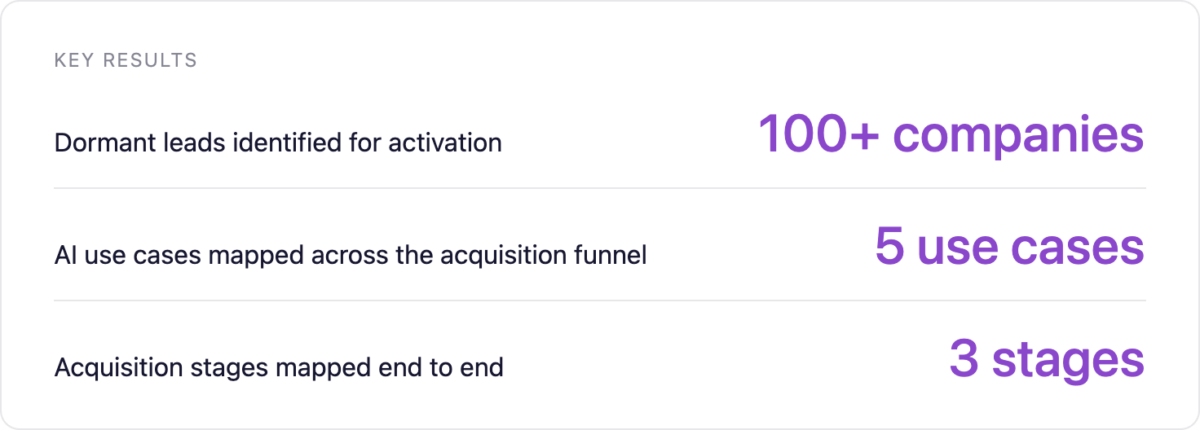
Dentsu’s case company was sitting on real business without a system to capture it. After industry events, leads went into spreadsheets and stayed there. Over 100 companies that had already shown interest by attending were never followed up with. The CRM existed on paper but wasn’t used as one in practice, so most sales decisions were made on instinct rather than data. The deeper issue only became clear after interviewing the growth lead, senior client directors, business directors, and an AI implementation specialist: the company had no way of capturing what actually happened in meetings and calls. First conversations weren’t recorded. Notes weren’t stored anywhere reusable. So every time a lead didn’t convert immediately, whatever we’d learned about them disappeared, and the next salesperson (or the next AI tool) had to start from zero. Leads weren’t cold, they were just poorly timed, and there was no infrastructure to reach them again once the timing changed.
The solution
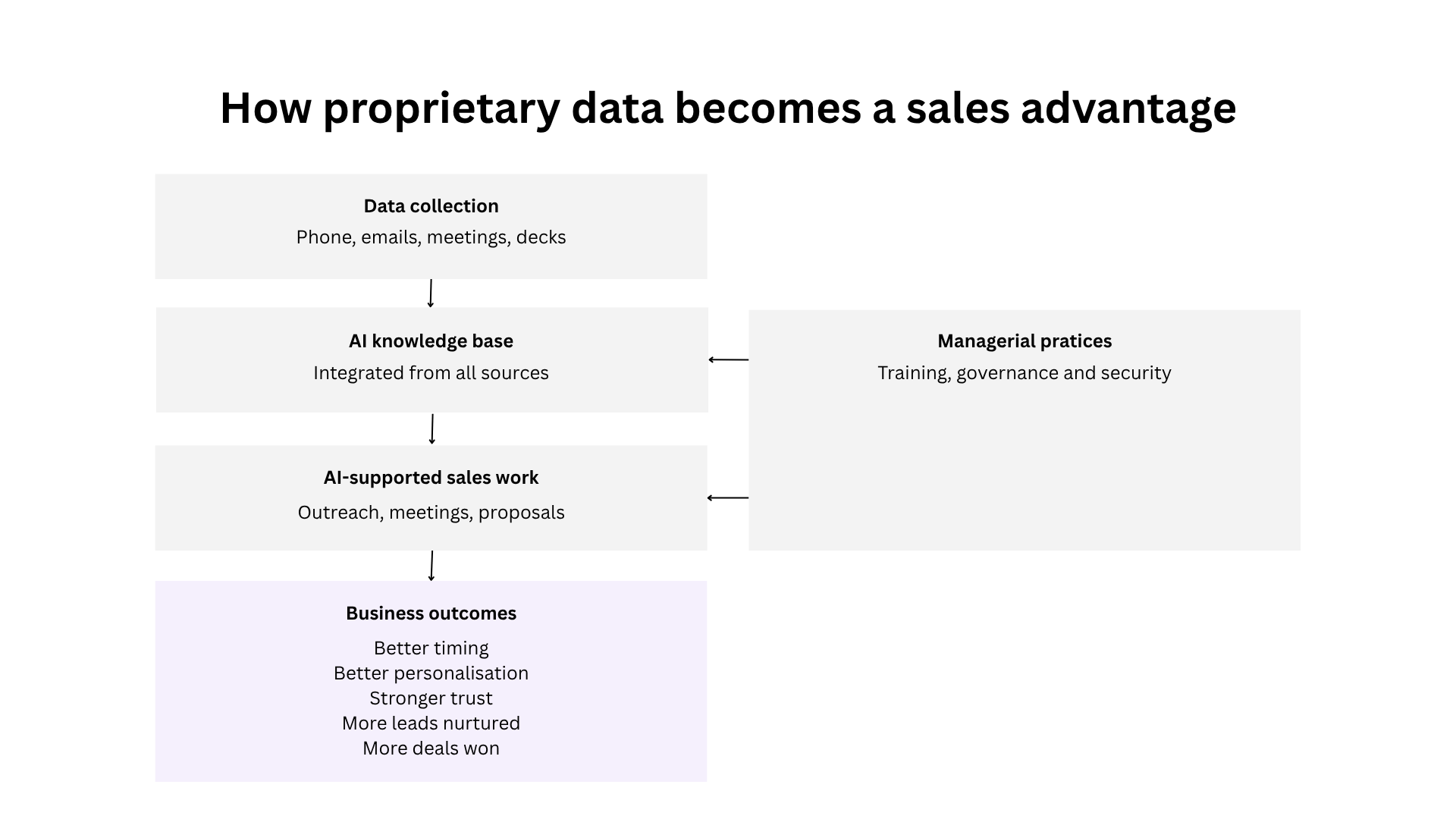
We mapped the customer acquisition process end to end, lead activation, meeting preparation, and post-meeting nurture, through interviews and internal documents, then coded the findings thematically to identify where AI could realistically help and what was blocking it. The central finding was that our AI problem was really a data problem. Every promising use case traced back to the same root cause: there was no proprietary record of what leads said, wanted, or responded to. Once that was clear, we defined the use cases that would actually move the needle rather than just automating existing tasks: An AI system to structure and store meeting and call content, so ICP fit and buying-stage signals aren’t lost after the call ends. That same stored data feeding back into targeting, so future outreach gets sharper instead of starting from public information alone each time. And a verification layer for outbound content, checking drafts against brief requirements and brand tone before anything goes to a client, since inconsistent, hallucination-prone first drafts were a recurring complaint. We also mapped why these use cases weren’t happening yet: security restrictions limited what AI tools could access, there were no shared AI practices across the team, and without stored interaction data, there was nothing for a smarter system to learn from.
The results
This mapping gave us a concrete, prioritized path instead of a vague sense that “AI could help somewhere.” The 100+ dormant leads went from an unstructured backlog to a defined activation target, one we could now build outreach around using actual buying-stage and fit criteria rather than guesswork. Our analysis identified five distinct AI use cases across the three acquisition stages, each tied to a specific pain point rather than a generic automation wish list. And it surfaced the dependency we’d been missing: data quality has to come before organizational capability, which has to come before any of these tools can be applied at the right stage. That ordering became our practical starting point for how to sequence AI investment going forward.