

Meta Advantage+ for B2B SaaS: When It Works and When It Doesn’t
September 15, 2026
LinkedIn Ads in the US vs. Europe: Why Your CPC Triples
The widget above shows the number that trips up most European SaaS teams moving into the US: LinkedIn CPC for SaaS advertisers runs $8 to $12 in North America, against €4 to €5 in Europe, according to one European LinkedIn ad benchmark report. That’s not a modest premium, it’s roughly double to triple the cost per click, and a budget planned against European assumptions will run out well before it generates enough data to tell you anything.
Why you should split budget by region from day one
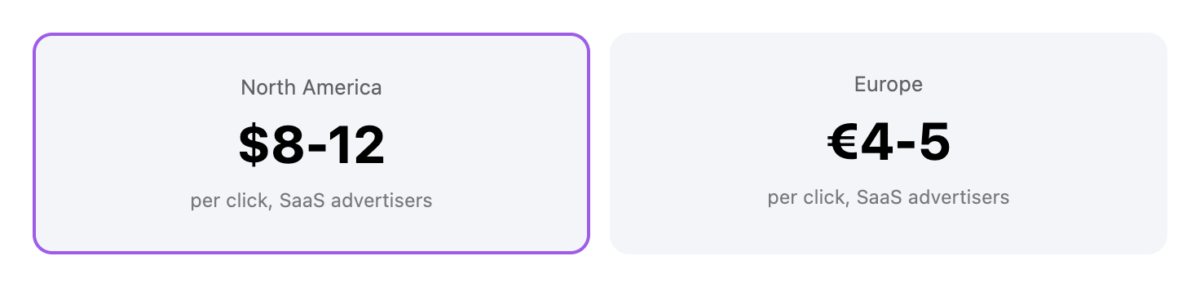
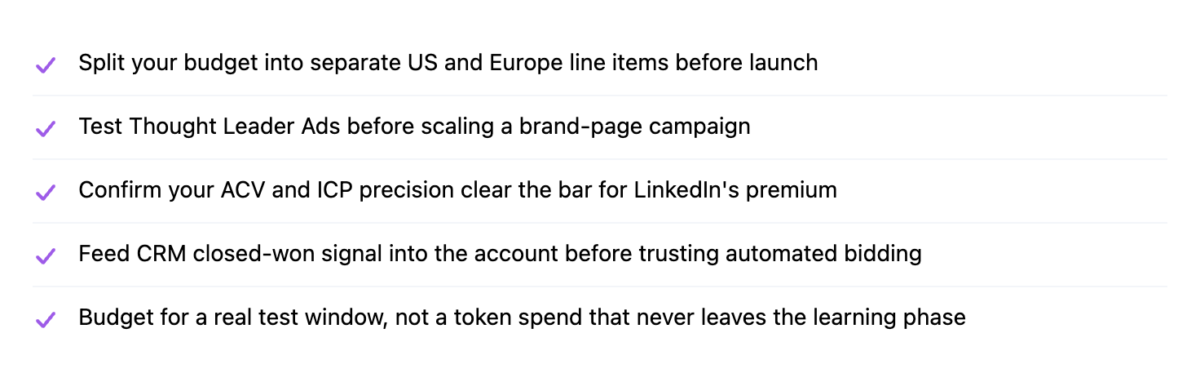
Treating US and European LinkedIn spend as one combined budget line hides the fact that they’re functionally different channels with different unit economics. Split them from the first campaign, even if the US allocation starts small, so you’re comparing US performance against US cost, not against a blended number the European side is quietly subsidizing.
The format that changes the equation: Thought Leader Ads
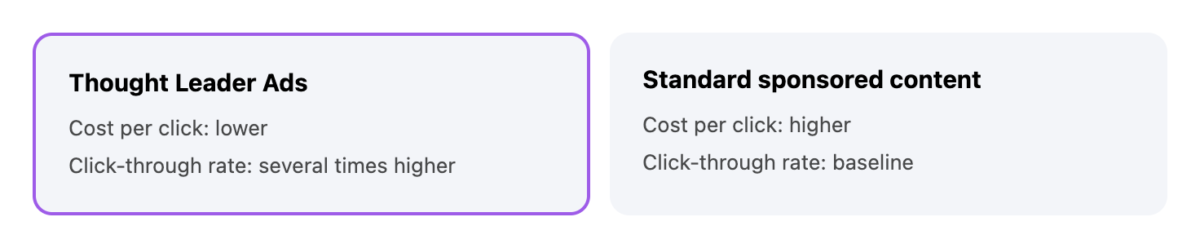
Thought Leader Ads, sponsored posts from individual employee accounts rather than the brand page, consistently run at a lower cost per click and a meaningfully higher click-through rate than standard single-image sponsored content. Professional audiences respond to a person’s voice more than a corporate one, which is exactly the dynamic Thought Leader Ads are built to exploit. For a European SaaS team facing US CPC for the first time, this format is worth testing before scaling any brand-page campaign, since it stretches a smaller test budget further while you’re still establishing whether the channel works.
Predictive Audiences: the AI layer already running under the hood
LinkedIn’s Predictive Audiences, its AI-driven segmentation layer, is already shaping delivery across most Sponsored Content accounts whether or not you’ve configured anything explicitly. Combined with automated bidding, it tends to outperform manual bid management, the same pattern seen with Google’s PMax and Meta’s Advantage+: automation wins once it has a working conversion signal, and struggles without one. If your CRM can pass closed-won signal back into LinkedIn, feed it, since that’s what the algorithm is actually optimizing against.
What minimum budget you need to test the US without fooling yourself
At $8 to $12 per click, a few hundred dollars won’t produce a usable signal. Budget for enough spend to generate a real click volume over several weeks before drawing any conclusion, and expect the learning period to cost more, in absolute dollars, than the equivalent test would have cost in Europe. This is the same instrumentation discipline covered in the demand generation KPI framework: judge the channel on your own first quarter of US data, not on a benchmark built from a different market’s cost structure.
When high US CPC is still worth it (and when it isn’t)
LinkedIn’s premium pricing is justified when your ACV and ICP precision are both high enough to absorb it: a narrowly defined enterprise buyer, a deal size that can carry a few hundred dollars in cost per qualified lead, and product-market fit already established. Below that combination, other channels tend to have better unit economics, and LinkedIn becomes an expensive way to learn what a cheaper channel could have told you. The US vs Europe SaaS benchmarks on CAC and ACV are the right place to check whether your deal size actually clears that bar before committing US budget to the platform.
Migration checklist: from your European account to your first US campaign
None of this replaces the sequencing set out in the US market entry playbook: LinkedIn earns its place in the channel mix once outbound and paid search have proven demand, priced at US rates from the start, not European ones with a hopeful markup.

ABOUT THE AUTHOR
Written by Luca Lundgren, Founder at Demand Scalers. Luca has five years of demand generation experience working with companies like Simplex Wireless and Dentsu, and holds a Master’s in Marketing from Aalto University.