

LinkedIn Ads in the US vs. Europe: Why Your CPC Triples
September 22, 2026
AI Ad Creative Tools for SaaS: A Buyer’s Guide
September 29, 2026

Attribution for AI-Driven SaaS Ad Campaigns: Measuring the Invisible
Your Google Ads dashboard says one thing, your CRM says another, and finance’s net-new ARR number matches neither. That’s not a tracking bug you need to fix with better UTMs. It’s an accurate description of how B2B SaaS buying actually works now, and AI-driven ad platforms make the gap wider, not narrower, since automated bidding optimizes toward whatever conversion event it can see, which is rarely the same thing revenue actually depends on.
Why your Google Ads, CRM, and billing numbers never line up
Each system measures a different slice of the same buyer’s journey, and none of them was built to talk to the other two. Ad platforms report clicks and in-platform conversions, your CRM reports the stages a lead moved through, and billing reports what actually got paid. A campaign can look like a win in Google Ads, show up as an unqualified lead in your CRM, and never appear in a revenue report at all. Treating any one of these numbers as the truth is the mistake; treating them as three partial views of one buyer is the fix.
The dark funnel: when ChatGPT influences the purchase and your pixel doesn’t see it
The research phase of a B2B purchase increasingly happens somewhere no tracking pixel can reach: a ChatGPT comparison, a Slack conversation with a peer, a podcast mention. That buyer then arrives at your site by typing your name directly, which your analytics records as “direct traffic” or branded search, with zero credit to whatever actually built the shortlist.
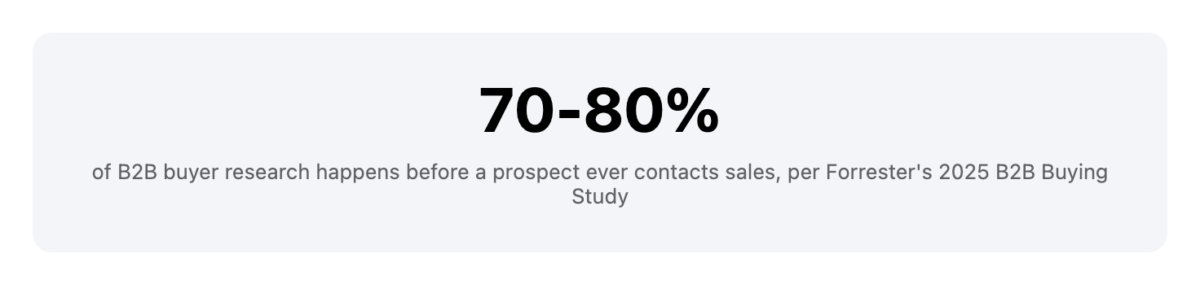
Most of that research happens in channels last-click attribution was never designed to measure, according to one detailed breakdown of the dark funnel problem. Brand search volume is currently the best available proxy for that invisible influence, imperfect as it is.
Self-reported attribution: the question that actually works
The most direct fix costs nothing to implement: ask. An open-text “how did you hear about us” field at a high-intent conversion point, a demo request or contact form, captures channels no pixel ever will. Use an open-text field rather than a dropdown, since a dropdown only ever confirms the channels you already thought to list, and place it at the point of highest intent rather than earlier in the funnel where answers are less considered. It takes a few months of accumulated responses before the patterns are reliable, so don’t judge this data source on its first few weeks.
Long attribution windows: why 30 days falls short in B2B
A standard 30-day digital attribution window assumes a buying process that mostly doesn’t exist in B2B SaaS anymore. Deals now regularly span months, with a buying committee of several stakeholders each doing their own research on their own timeline. A campaign that gets no credit inside 30 days may still have been the thing that started the whole evaluation; extend your reporting windows to match your actual sales cycle length, not a default that was built for ecommerce.
From cost per lead to cost per SQL: the metric to report
Every metric upstream of cost per SQL is vulnerable to exactly the gaming problem covered elsewhere in this cluster: a cheap conversion event that an automated bidding algorithm chases is worthless if it never becomes pipeline. This is the same KPI discipline that applies across every AI-driven channel in this series, Performance Max, Advantage+, LinkedIn, ChatGPT Ads alike: report the number tied to revenue, not the number the platform makes easiest to show.
Tools to connect ad spend to net new ARR
Closing this loop means feeding closed-won and net-new ARR data back into your ad platforms as offline conversions, not just watching in-platform reporting. Most major ad platforms support this connection now; the harder part is operational, keeping the CRM stage definitions clean enough that “closed-won” means the same thing to sales and to the algorithm reading it.
How to build a minimal viable dashboard without over-engineering
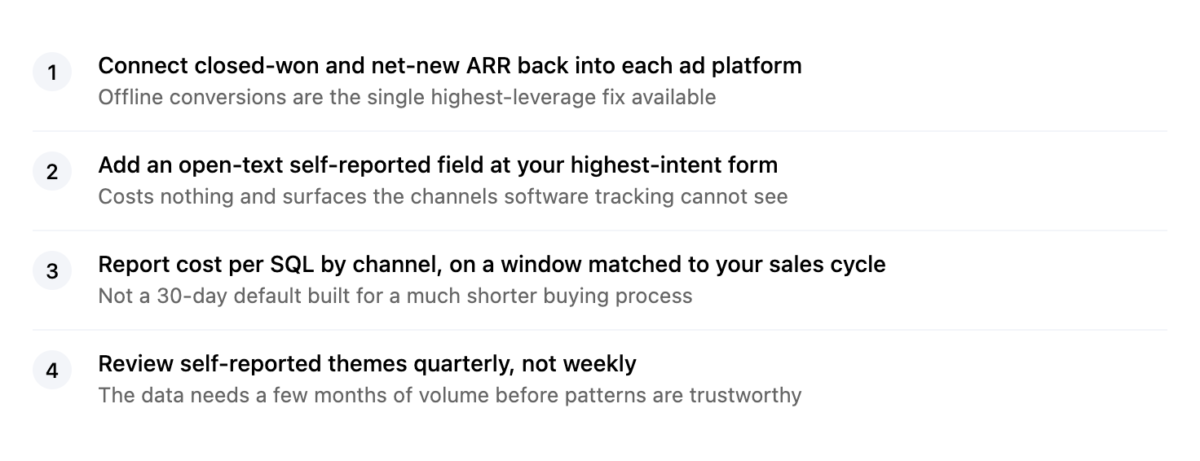
None of this replaces the sequencing set out in the US market entry playbook: attribution discipline is what makes every other channel decision in this channel mix trustworthy, and matching your reporting window to your actual sales cycle length is the single easiest fix on this list to make today.

ABOUT THE AUTHOR
Written by Luca Lundgren, Founder at Demand Scalers. Luca has five years of demand generation experience working with companies like Simplex Wireless and Dentsu, and holds a Master’s in Marketing from Aalto University.